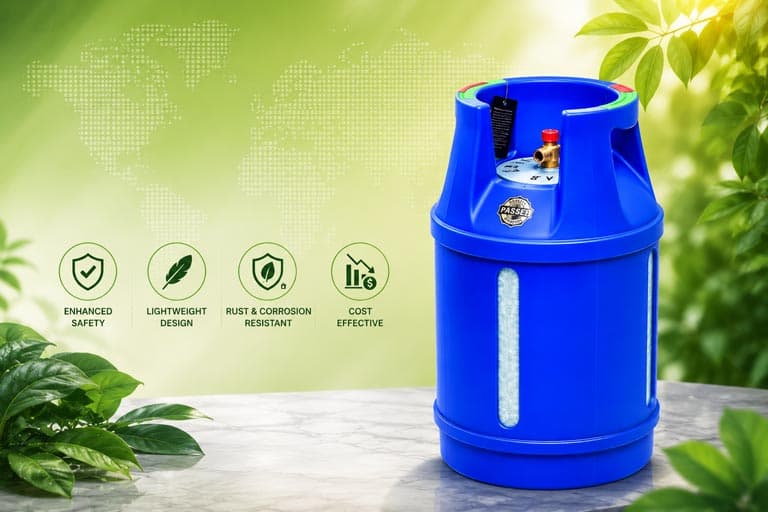
Complete guide to buying and refilling a composite LPG cylinder in Islamabad and Rawalpindi — WAA Technologies authorised dealers across F-6, F-7, F-10, G-11, Bahria Town, and DHA. Includes winter gas shortage preparedness tips for twin cities households.
Buy a Composite Cylinder in Islamabad / Rawalpindi
- ✓Islamabad and Rawalpindi experience Pakistan's most severe winter gas shortages — composite LPG is the only reliable backup
- ✓Authorised WAA Technologies dealers serve F-6, F-7, F-8, F-10, G-11, Bahria Town, DHA Islamabad, and Rawalpindi Saddar
- ✓Call (+92) 42 37815533 for dealer referral to your nearest Islamabad or Rawalpindi location
- ✓Twin cities' colder winters mean higher LPG usage — 12 kg cylinder recommended for family households here
- ✓Islamabad's OGRA-compliance culture is strong — composite ISO-certified cylinders pass all commercial inspections easily
Islamabad and Rawalpindi — Pakistan's twin cities — sit at higher elevation than Lahore and Karachi and experience colder winters, stronger winds, and a gas shortage pattern that is, by objective measurement, among the most severe in Pakistan. The SNGPL pipeline serving the twin cities faces peak pressure collapse during January and February, when temperatures regularly drop below 5°C and heating demand from millions of households in Punjab, KPK, and Gilgit-Baltistan simultaneously peaks. Twin cities households — particularly those in Islamabad's higher-altitude F-sectors, I-sectors, and Bahria Town — experience sustained cooking gas outages that can last days at a time during the worst winter weeks.
A WAA Technologies composite LPG cylinder is the most practical and reliable solution to this recurring annual crisis. This guide covers everything Islamabad and Rawalpindi households need to know: where to buy, which size to choose, the dealer network across both cities, and why the twin cities environment makes composite cylinders particularly worth the investment. For a complete guide to preparing for Pakistan's winter gas shortage, see how to prepare your home before the shortage hits.
Why Islamabad and Rawalpindi Need LPG Backup More Than Most Pakistani Cities
The twin cities' gas shortage vulnerability has three components. First, elevation: Islamabad sits at 507 metres above sea level — higher than Lahore (218 m) and Karachi (8 m). Higher altitude means lower ambient temperatures, which means greater heating demand that is simply not a factor in warmer cities. Second, cold wave exposure: Islamabad is exposed to cold waves descending from the Himalayan foothills, making its temperature extremes more severe than the Punjab plains. Third, pipeline geography: the SNGPL transmission pipeline serving the twin cities is a long-distance supply chain that passes through heavily loaded sections serving Lahore and Faisalabad before reaching Islamabad — meaning pressure at the end of the line is disproportionately affected by system-wide demand spikes.
These factors combine to make Islamabad and Rawalpindi households disproportionately vulnerable to winter gas outages and disproportionately benefited by having a reliable LPG backup. A 12 kg composite cylinder — or two 10 kg cylinders in rotation — provides 6–10 weeks of uninterrupted cooking fuel for a twin cities family household. This is typically sufficient to carry a household through an entire winter shortage season without any gas-related cooking disruption.
Recommended Cylinder Size for Twin Cities Households
Given Islamabad and Rawalpindi's colder winters and higher heating demand, the 12 kg composite cylinder is the recommended size for family households in the twin cities. For households that also use LPG for water heating (common in areas with unreliable electric geyser supply), the 12 kg cylinder is especially appropriate — it provides sufficient gas volume for both cooking and water heating during outage periods without requiring daily refills.
For single-person or couple households, or for households where LPG is strictly an emergency backup used only during outages, the 10 kg cylinder is the more economical choice — lower purchase price and lower refill cost, with a fill still lasting 4–7 weeks under moderate backup-only use.
Twin Cities Areas Served by WAA Authorised Dealers
WAA Technologies authorised dealers cover both Islamabad and Rawalpindi extensively:
Islamabad: F-6, F-7, F-8, F-10, F-11, G-9, G-10, G-11, I-8, I-9, I-10, Bahria Town Islamabad, DHA Islamabad, PWD Housing Society, Margalla Hills–adjacent E-sectors.
Rawalpindi: Saddar, Bahria Town Rawalpindi, DHA Rawalpindi, Chaklala Scheme, Satellite Town, Lalazar, PWD Colony, and commercial areas near Murree Road and GT Road.
Contact WAA Technologies at (+92) 42 37815533 or visit waatechnologies.com/authorized-dealers for the specific dealer nearest to your twin cities address.
Frequently Asked Questions for Islamabad and Rawalpindi
How severe is the winter gas shortage in Islamabad?
Islamabad consistently records among Pakistan's most severe winter pipeline gas pressure collapses. In January and February 2024 and 2025, twin cities households reported gas pressure dropping to near-zero for periods of 8–20 hours per day during peak cold weeks. Cooking on piped gas became impossible for many households during these periods. An LPG composite cylinder provides completely independent cooking fuel during these outages.
Is a 10 kg or 12 kg composite cylinder better for Islamabad winters?
For a family of 4+ using LPG for cooking only: 10 kg lasts 4–6 weeks, 12 kg lasts 5–8 weeks. Given Islamabad's winter shortage typically lasting 8–12 weeks (November to February), the 12 kg cylinder with one refill in reserve provides the most comfortable coverage. For households also using LPG for water heating during outages, the 12 kg is essential.
Are WAA Technologies cylinders available in Bahria Town Islamabad?
Yes. WAA Technologies has authorised dealer coverage in Bahria Town Islamabad. Contact (+92) 42 37815533 for the specific Bahria Town dealer nearest to your phase or sector.
Can I use a composite LPG cylinder outdoors in Islamabad's cold weather?
Yes. WAA composite cylinders are rated for outdoor storage and use across the full range of Pakistani temperatures — from Islamabad's near-0°C January nights to Pakistan's 45°C+ summer peaks. The HDPE body is UV-stabilised for outdoor storage and the composite construction is unaffected by temperature cycling. Note that at very low temperatures, LPG vaporisation rate decreases slightly — this is a property of LPG itself, not the cylinder, and is the same for all cylinder types.