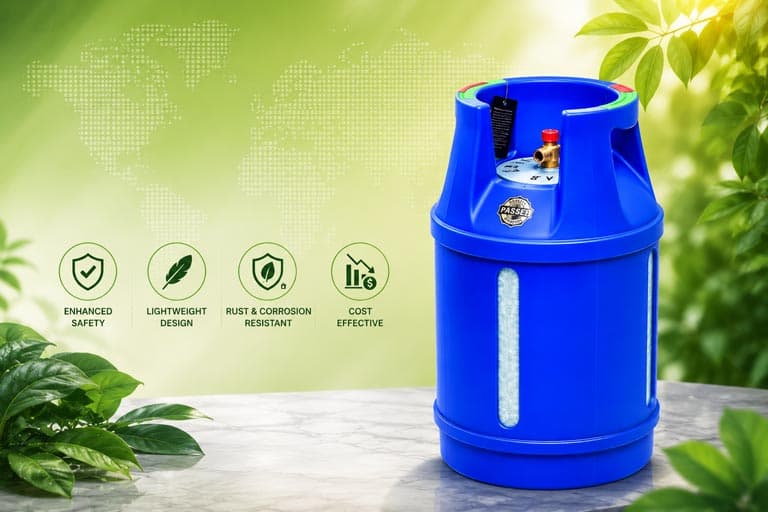
Pakistani markets are flooded with cheap imported cylinders from China. This comparison examines certification standards, material quality, safety testing, pricing, and long-term reliability — and explains why locally manufactured composite cylinders are the safer, smarter choice.
Warning: Uncertified Imported Cylinders Are a Documented Safety Risk
- !Pakistan's market contains imported cylinders — primarily from China — that carry certification markings but may not have undergone genuine ISO testing
- !Counterfeit ISO stickers and stamps are applied to cylinders manufactured to no international standard at all
- !Uncertified cylinders have no guaranteed burst pressure, no fire engulfment testing, and no service life data
- !OGRA does not maintain a real-time registry of approved imports — verifying import cylinder compliance requires checking back to the original testing laboratory record
- !Locally manufactured WAA Technologies cylinders have individual serial numbers traceable to Gujranwala production and testing records — a paper trail that import cylinders frequently lack
Pakistan's LPG equipment market is not sealed. Cylinders, regulators, and hoses manufactured in China enter Pakistan through both formal import channels and informal grey-market routes. Some of these imported products are genuinely certified to international standards and represent legitimate choices. Many are not. The challenge for Pakistani consumers is that the certification claim on an imported cylinder — the ISO logo, the standard number, the test date — is not self-verifying. A sticker or stamp is only as trustworthy as the organisation that applied it. This guide helps Pakistani households and businesses understand the real differences between import cylinders and locally manufactured composite cylinders, and how to protect themselves from buying an uncertified product marketed as certified. To understand what genuine ISO certification requires, see the in-depth guide on composite LPG cylinder safety standards in Pakistan.
The Import Cylinder Market in Pakistan
China is the world's largest manufacturer of composite and steel LPG cylinders by volume. Chinese manufacturers range from internationally accredited facilities producing genuinely certified cylinders that meet ISO 11119-3 standards and are exported legitimately worldwide, to smaller operations producing substandard cylinders with certification markings applied for marketing purposes rather than as a result of any actual testing. Both types of Chinese cylinders appear in the Pakistani market.
The formal import route — through a registered LPG equipment importer, with customs documentation, and sold through OGRA-licensed dealers — carries some accountability. An importer who brings genuinely certified Chinese cylinders through official channels is legally responsible for the compliance of what they sell. The informal grey-market route — cylinders arriving as part of mixed goods shipments, sold through hardware markets without documentation — carries no accountability and no traceability.
What "Certified" Actually Requires for Composite Cylinders
Genuine ISO 11119-3 certification requires testing at an ISO 17025-accredited laboratory. The test series includes burst testing, 12,000-cycle fatigue testing, fire engulfment testing (confirming non-blast behaviour), drop testing, and UV degradation testing. Each specific cylinder model must be tested — not a generic composite cylinder design, but the exact model with the exact dimensions, materials, liner specification, and winding parameters that will be sold. The testing laboratory issues a certificate to the manufacturer for that specific model, with a certificate number that is recorded in the laboratory's system and verifiable by anyone who contacts the laboratory with the certificate number.
A cylinder with an ISO 11119-3 logo printed on it but without an individual certificate number traceable to an accredited laboratory has not necessarily passed any of these tests. The logo alone proves nothing.
How to Evaluate an Imported Cylinder
If you are considering purchasing an imported composite LPG cylinder in Pakistan, verify the following before buying:
- Ask for the test certificate document — not just the marking on the cylinder, but the actual certificate issued by the testing laboratory. A genuine certificate names the laboratory, the date of testing, the cylinder model tested, and the certificate number.
- Verify the laboratory accreditation — the testing laboratory named on the certificate should be ISO 17025-accredited. Major accredited laboratories include TÜV (Germany), Bureau Veritas, SGS, DEKRA, and equivalent international bodies. Confirm the laboratory is real and that its accreditation covers composite cylinder testing.
- Check the individual cylinder serial number — a genuine certified cylinder has an individual serial number traceable to the manufacturer's production records. If the cylinder has no individual serial number, or has only a batch number with no model-specific certificate, traceability is compromised.
- Buy from an OGRA-licensed dealer — a licensed dealer takes legal responsibility for the compliance of products they sell. An unlicensed grey-market seller does not.
Why Locally Manufactured WAA Technologies Cylinders Are Traceable
WAA Technologies Pvt Ltd manufactures composite LPG cylinders in Gujranwala and certifies them through an internationally accredited testing process to ISO 11119-3 and EN 14427-2022. Every WAA cylinder has an individual serial number permanently marked on the cylinder body, traceable to Gujranwala production records and the specific certification testing batch. This traceability means that any OGRA inspector, any commercial buyer, and any household consumer can confirm a WAA cylinder's certification status through WAA Technologies directly.
WAA cylinders are sold exclusively through OGRA-licensed authorised dealers — there are no grey-market WAA cylinders in circulation, because WAA's distribution model is entirely through the authorised network. This gives buyers full legal protection: the dealer is licensed, the product is certified, and the certification is traceable.
Frequently Asked Questions
Are all Chinese LPG cylinders unsafe?
No. China produces both genuinely certified and non-certified cylinders. The key is verifying the specific product's certification — not making assumptions based on country of origin. A Chinese cylinder with genuine, traceable ISO 11119-3 certification from an accredited laboratory is as safe as an equivalent Pakistani-manufactured certified cylinder. The danger is in accepting certification claims without verifying them.
How do I tell if a composite LPG cylinder has fake certification markings in Pakistan?
Ask for the test certificate document with the certifying laboratory's name and certificate number. Verify that the laboratory exists and is ISO 17025-accredited. Check the cylinder for an individual serial number matching the certificate. If the seller cannot produce documentation, or if the certificate names a laboratory that does not appear in ISO 17025 accreditation records, treat the certification as unverified.
Is it legal to sell uncertified LPG cylinders in Pakistan?
No. OGRA regulations require all LPG cylinders sold in Pakistan to be certified to applicable standards (PS 4922 for steel, or ISO 11119-3 / EN 14427 for composite). Selling uncertified cylinders through an OGRA-licensed dealer is a licence violation. Selling through informal channels without an OGRA licence is a violation of the Petroleum Act. Both carry legal consequences — though enforcement at the retail level is inconsistent in Pakistan's current regulatory environment.
What should I do if I already bought an uncertified imported cylinder?
Stop using it and contact your dealer. If you cannot verify the cylinder's certification, do not use it for storing or dispensing LPG. Contact WAA Technologies or an OGRA-licensed dealer for a certified replacement. Report suspected uncertified cylinders to OGRA at their public complaint portal if you wish to alert regulators to a specific product or seller.